Page Contents
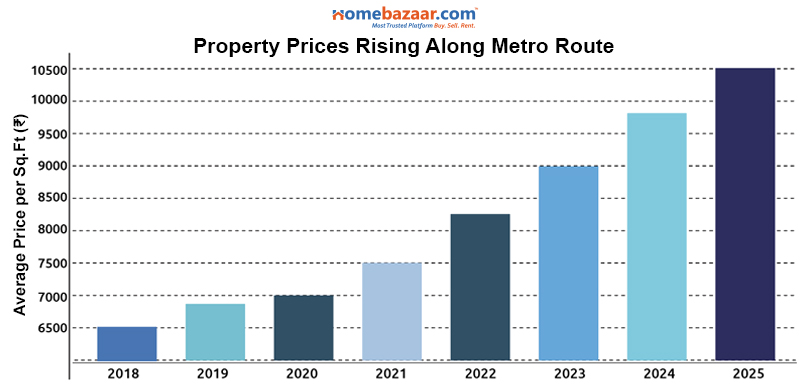
The Navi Mumbai Metro Line 1 has acted as a primary catalyst for real estate development. Houses developed near metro stations have seen steady price appreciation. Properties within 500 metres usually cost more. Homes located 1 to 3 kilometres away see moderate price growth.
After Navi Mumbai Metro Line 1 began operations, rental demand increased by nearly 14% over the past four years. Investors can earn both rental income and long-term appreciation.
Which Areas Near Navi Mumbai Metro Will Grow the Most?
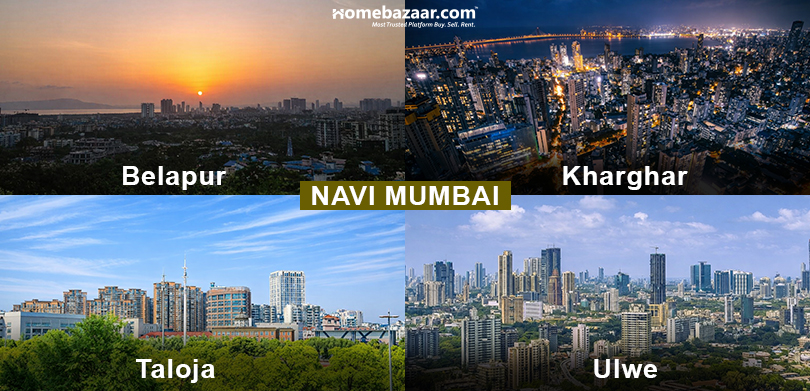 After the research there are few areas in Navi Mumbai which are likely to grow the most.
Belapur
Belapur is considered a well-established locality in Navi Mumbai that has reputable schools, advanced medical facilities, and strong infrastructure. Due to this, property prices are relatively higher in Belapur.
- Growth type in Belapur: It’s stable and moderate with steady appreciation.
- Rental demand is usually stronger in this locality due to multiple corporate office working professionals opting for easier access.
- Investors can expect consistent rental income and steady appreciation.
Kharghar
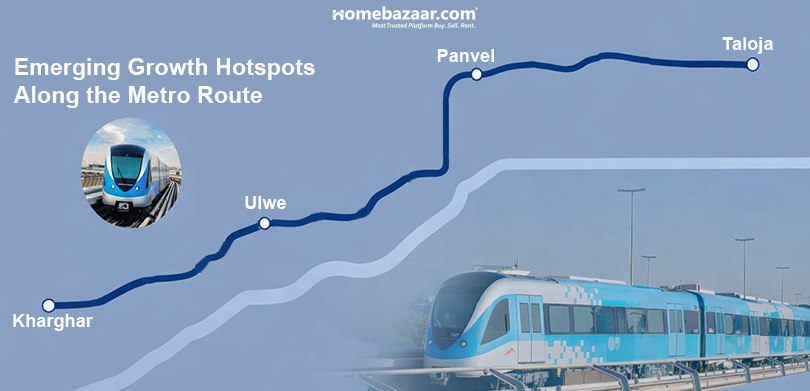
Kharghar is both a residential and educational hub. The Navi Mumbai Metro improves connectivity within Kharghar and toward Belapur and Taloja.
- Growth type in Kharghar: balanced and sustainable growth.
- Kharghar offers both end user demand and investor demand.
- The prices are moderate compared to Belapur but higher than Taloja.
Here, rental demand is actively increased by the working professionals, students, and families. It is likely to experience steady growth until 2030 because of strong local demand and planned development.
Taloja
Taloja is mainly an industrial zone with recently experienced growth in residential areas. The property prices are lower compared to Belapur and Kharghar.
Taloja has a potential growth type with increasing residential areas. It is a perfect choice for long-term investors who can patiently wait for 6-8 years.
Ulwe
Ulwe is close to the Navi Mumbai International Airport, which is driving strong residential demand. The Navi Mumbai Metro and airport connectivity all together creates strong appreciation.
Ulwe is experiencing steady growth with a promising future. Property prices in Ulwe have seen a significant and steady rise with average property value ranging from ₹12,469 per sq. ft.
The rental demand has increased driving growth due to employment opportunities at the Navi Mumbai Airport. It offers a steady 4-7% annual rental yield to the investors.
Comparison with nearby localities and market trends
| Panvel | Thane |
| Strong benefit of Navi Mumbai International Airport | More established and closer to Mumbai city. |
| Compete with Ulwe for airport-driven demand. | Property prices are higher. |
| Navi Mumbai Metro connectivity offers better access to other localities within Navi Mumbai. | Stable and mature market growth. |
If the infrastructure development is consistent and emerging, the areas like Ulwe and Taloja may experience higher percentage growth.
Belapur, one of the developed areas, will likely experience steady and long-term growth.
How Navi Mumbai Metro Is Helping Shops and Offices
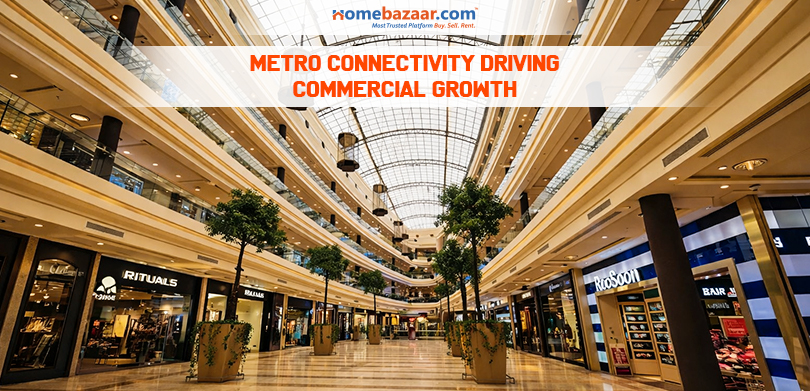
The Navi Mumbai Metro has impacted not only residential demand but also commercial real estate. Shops, offices, and warehouses benefit directly from better connectivity.
Impact on Commercial Office Demand
Developing office spaces near metro stations attracts more residential as well as business districts.
Office buildings near metro corridors often experience:
- Higher occupancy rates
- Better long-term tenant retention.
Growth of Retail Stores and High Streets near Metro Stations
Transit-Oriented Development means building homes, offices, and shops close to metro stations. Developers plan mixed-use projects where:
- Lower floors are retail shops
- Middle floors are offices
- Upper floors are residential apartments
This model increases land efficiency. For investors, mixed-use projects offer multiple income streams. For businesses, these locations provide built-in customer traffic. The Navi Mumbai Metro supports this type of structured urban growth.
Why Businesses Prefer Metro-Connected Locations
Businesses choose locations based on three main factors:
- Accessibility
- Cost efficiency
- Employee convenience
The Navi Mumbai Metro improves all three.
- Accessibility improves because customers and staff can reach their workplaces easily.
- Cost efficiency improves because employees spend less on daily travel.
- Employee convenience improves job satisfaction and retention.
Metro connectivity shows government commitment to long-term development.
 How Navi Mumbai Metro and the Airport Boost Real Estate Growth
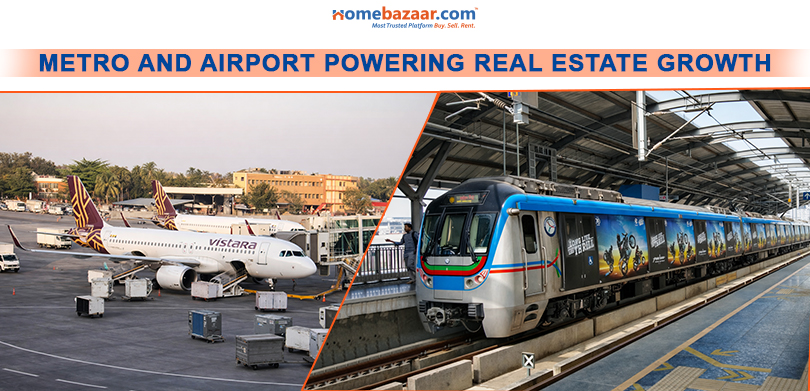
When large infrastructure projects combine, they create a strong impact on the nearby localities. In Navi Mumbai, the combination of the Navi Mumbai Metro, the Navi Mumbai International Airport, and the Atal Setu link creates a powerful growth system.
Below is a clear explanation of how this combined impact increases real estate demand.
| Navi Mumbai Metro | Navi Mumbai International Airport | Atal Setu |
| Improves local travel. | Improves global and national travel. | Faster connection between South Mumbai and Navi Mumbai. |
| Faster office commute. | Easy and traffic free access. | Shorter commute between business and residential hubs. |
| Demand rises from working professionals and locals. | Demand rises from business owners, frequent flyers. | People choose to stay in Navi Mumbai while working in Mumbai. |
When metro lines, highways, airports, and bridges work together:
- Travel becomes flexible
- Risk of location isolation reduces
- Economic activity increases
- Buyers and investors see lower long-term uncertainty.
If infrastructure delivery continues as planned, areas connected to both the Navi Mumbai Metro and the airport corridor may see stronger and more sustainable property growth compared to isolated zones.
Do read, https://www.homebazaar.com/knowledge/navi-mumbai-metro-line-updates/
 Long-Term Investment Potential Near Navi Mumbai Metro
Living near the metro reduces daily travel time and transport expenses. Better connectivity improves overall lifestyle.
Working professionals prefer homes close to metro stations. This increases rental demand and reduces vacancy risks. Stable demand supports consistent rental income.
Areas like Ulwe, Taloja, and Kharghar are growing metro corridors and experience steady price appreciation. Infrastructure development often attracts business and job growth.
Navi Mumbai Metro connectivity strengthens long-term demand. Investment success depends on entry price, location quality, and future development process.
FAQs
Does the Navi Mumbai Metro increase property values?
Yes, better connectivity within Navi Mumbai increases housing demand and supports price growth.
What is the benefit of having a metro and airport nearby?
It improves local and global connectivity, making the area more attractive.
Do rental properties perform better near metro routes?
Yes, working professionals prefer metro access, which supports steady rental demand.
Is buying land near a metro beneficial for investment?
It can be beneficial, but the returns depend on the completion of the project and job growth.
Is it better to buy a home near a metro station?
Homes near stations are more convenient and often have stronger demand.