Homebuying is a daunting process that requires extensive research, understanding, planning, and smart execution. However, it is vital to decide whether you want to reside or invest in a property. End-use and investment property concept that revolves around the purpose of acquiring the property. Whether the homebuyer wants to reside or rent differentiates the whole process and returns on the property.
End-use and investment property are two different concepts. Homebuyers purchasing a property for end-user purposes must be aware of current and upcoming aspects of the location. However, those who want to rent or lease the property can do sufficient research on the location and the builder’s credibility.
Along with this comes a dilemma of choosing between a 1 BHK and a 2 BHK apartment. The intention of homebuying changes from 1 BHK to 2 BHK apartments. While 1 BHK suits the minimalistic needs of first-time homebuyers, 2 BHK apartments offer a more luxurious lifestyle to premium-segment homebuyers. Let’s decode this complexity with this detailed guide.
Page Contents
End-Use and Investment Property: Decoding the Meaning
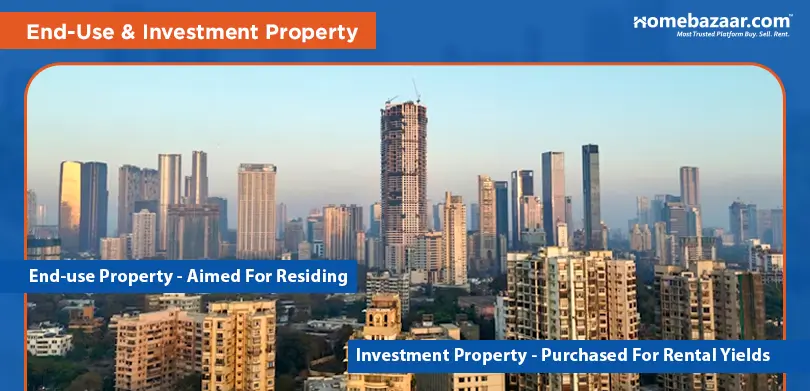 The end-use home is the one that is purchased to reside in for the long term. These homebuyers are end users. Whereas an investment home is purchased for rental income or as a long-term asset. The investment property is acquired with the sole aim of gaining profits. Understanding their differences will help you strategise your homebuying process efficiently.
The end-user will always look for a property that will cater to their needs of safety and lifestyle. Many factors will determine the suitability of the property for the end user, like the project type, amenities, safety features, views, surroundings, connectivity, etc.
On the other hand, purchasing an investment property will rely on factors like location, infrastructure development, evolving market trends, investment potential, etc. Investors required assurance on the price appreciation.
Factors Influencing The End-Use Property
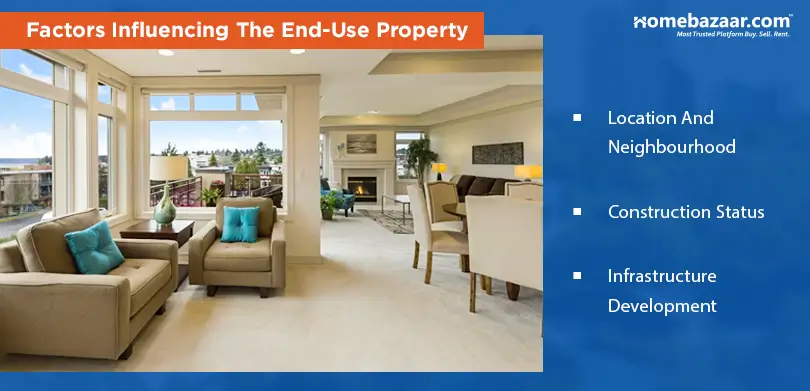 Location and Surroundings
Location plays a vital role in determining the property value. For an end-user, it is important to select the location wisely, considering the environment, daily necessities, community, civic facilities, and connectivity. The surroundings and neighbourhood will matter a lot, as they affect your daily living experience. A project in a bustling location near the major roadways might be disturbing for the residents. The consistent disturbance invades the comfort and mental peace, even within your home.
Apart from this, a location with excellent social landmarks, connectivity sources, good civic amenities, and safety facilities is more suitable than a developing one. End-use homebuyers are mostly families who look for prominent schools, healthcare facilities, and nearby workplaces. Hence, selecting the most suitable location will assure a convenient lifestyle.
Construction Status
Knowing the project status beforehand will help the end-user to plan accordingly and make informed decisions regarding the homebuying process. Those who are looking for immediate residence require ready-to-move or nearing-possession properties. Under-construction and newly launched projects will be of no use to them.
If you want to buy a property for an end use while you are living on rent now, then it is always advisable to opt for a ready-to-move project. This prevents you from a double load of rent and hefty EMIs in case of home loans. Ready-to-move properties might provide you with no discounts and cost more than the pre-launch ones; however, this will prevent the risk of delayed possession or stuck construction.
Infrastructure Development
The infrastructure of a particular location underscores its investment potential. A project situated in a prime metropolitan area with sound infrastructure always ensures consistent price growth and a hassle-free lifestyle. If you are an end-user opting for a high-end property with advanced facilities, you must choose the top markets in metropolitan cities such as Mumbai, Bangalore, Navi Mumbai, Pune, etc.
In other cases, if you are looking for a premium yet reasonably priced home, you can opt for a developing micromarket or the suburbs of the prime cities. These growing areas provide a huge scope of development with ongoing and upcoming infrastructure projects.
Factors Influencing The Investment Property
 Market Trends
As an investor, it is vital to research and understand the market trends and demand-supply dynamics of a particular location or city. It greatly influences the investment property. The market dynamics keep evolving with changing demands, preferences, and appreciation scale.
You must know the nuances of the market you are opting to invest in. Understanding the demand-supply graph and price trends will result in informed decisions. It will help you select the suitable property type, plan your budget, and calculate your yield after deducting the expenses.
Investment Potential
Following the market research, you will be able to understand the investment potential of a location you want to invest in. Choosing a project with an assured return on investment or good resale value is paramount to avoid losses in future. Consider the surrounding facilities and infrastructure development while assessing the potential of the project or location.
Tier 2 cities are currently experiencing a huge traction from investors considering their scope of development, affordability, and assured return on investment. Their consistent growth trajectory leads to steady price appreciation and can also ensure stable rental income.
Upkeep Cost and Maintenance
While investing in a property, one must also take note of the recurring costs associated with leasing the property. There are certain costs that you have to bear for maintaining the quality and value of your property. Frequent maintenance and repairs are additional expenses that are borne by the investor.
Apart from this, one must also consider the time commitment required for searching and analysing the tenants before leasing the property. Leasing the property is also a daunting task to finalise the right tenant with favourable terms and conditions. In some instances, tenants could be a nuisance. Hence, before investing in a property investor must take note of all these factors to avoid uncertainties.
FAQs
| What is the meaning of investment property?
An investment property is purchased to gain rental income or as a long-term asset. |
| What are the factors to be considered while buying an investment property?
While buying an investment property, one must consider factors like market trends, investment potential, upkeep cost and maintenance. |
| What is an end-use property?
An end-use property is the one purchased for primary and consistent use. An end-user resides in this property rather than keeping it just as an asset. |
| What are the decision drivers for an end-use property?
Location, neighbourhood, infrastructure development, construction status of the property, and quality are the key driving factors for an end-use property. |
| Which is better among end-use vs investment property?
It depends on the purpose of homebuying. If you are aspiring for a stable residence for long-term benefits, then an end-use property is ideal. However, if you want a rental income or are looking for an investment option with lucrative returns, then investment property is the best option. |