Page Contents
What Is the Panvel-Karjat Rail Corridor?
The Panvel-Karjat Rail Corridor is a 29.6 km double-line suburban railway under construction in the Mumbai Metropolitan Region. This corridor would increase connectivity between Navi Mumbai and Karjat and would lessen congestion on current railway lines.
Being developed under the Mumbai Urban Transport Project, the corridor has an estimated cost of ₹2,782 crore and is being implemented by Central Railway. The line will have five stations: Panvel, Chikhale, Mohape, Chowk, and Karjat.
Additionally, the project will increase connectivity between Navi Mumbai and Karjat and help stimulate growth in residential, commercial and infrastructural development along the corridor. Construction of the corridor is nearly 80% completed as of May 2026, and it is in its final stage of completion.
Route and Stations of the Panvel-Karjat Line
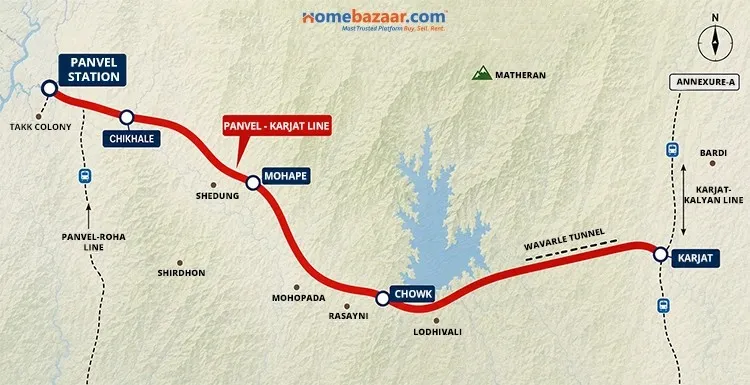
The Panvel-Karjat rail line will connect five stations: Panvel, Chikhale, Mohape, Chowk, and Karjat. The 29.6 km corridor is being developed as a fully electrified double-track suburban route to support local train services.
One of the key highlights of the project is its engineering infrastructure. The corridor includes three tunnels with a combined length of around 3.1 km.
| Tunnel | Length |
| Nadhal Tunnel (T1) | 219 m |
| Waverly Tunnel (T2) | 2.6 km |
| Kirawali Tunnel (T3) | 300 m |
The Waverly Tunnel is the longest suburban railway tunnel in the Mumbai local train network.
Apart from tunnels, the project includes 47 structures such as 6 major bridges, 29 minor bridges, and 2 rail flyovers at Panvel and Karjat. These flyovers are being built to ensure smoother train operations without conflicts with existing railway lines.
The upgraded corridor will replace the earlier low-capacity rail line and provide a dedicated suburban route between Panvel and Karjat.
Timeline and Progress of the Panvel-Karjat Project
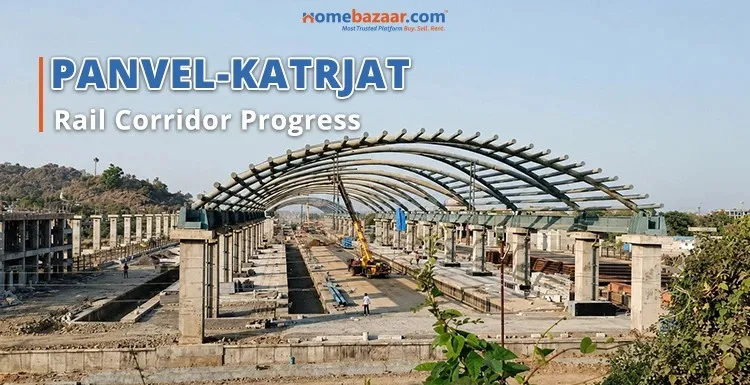
The Panvel-Karjat Rail Corridor was approved in 2016 under the Mumbai Urban Transport Project Phase 3. After land acquisition and planning work, major construction activities picked up between 2022 and 2023.
In late 2024, the project had completed an estimated 67% of its overall physical work, and considerable effort was devoted to bridges and tunnels. By mid-2026, the corridor was almost 85% physically complete and is the most advanced rail infrastructure project in the region.
| Milestone | Status |
| Project Approval | 2016 |
| Corridor Length | 29.6 km |
| Land Acquired | 61 hectares |
| Physical Completion | Around 85% |
| Expected Handover | October 2026 |
All three railway tunnels have been completed, including the 2.6 km-long Waverly Tunnel. More than 35 bridges along the route are also finished. Work is currently focused on track laying, signalling systems, station development, and final safety checks.
According to project updates, the corridor is expected to be handed over to Central Railway in 2026 for trial runs before passenger services begin.
Key Benefits of the Panvel-Karjat Rail Corridor
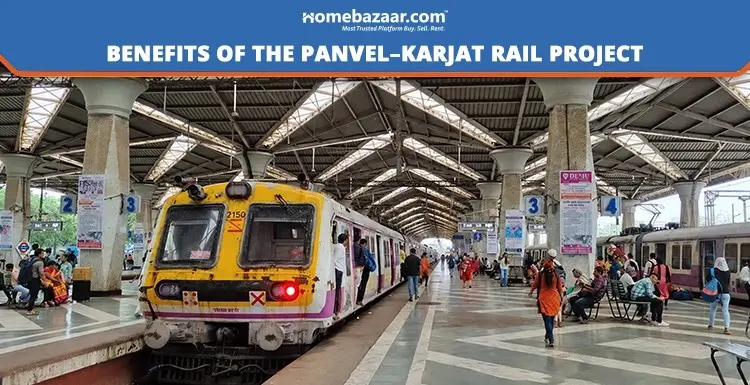
The Panvel-Karjat Rail Corridor would facilitate day-to-day journeys and easy accessibility between Navi Mumbai and Karjat. One of the major advantages being the decreased travel time. Commuters travelling between CSMT and Karjat could save around 20 to 30 minutes by avoiding the busy Kalyan route.
Travel between Panvel and Karjat is also expected to become much quicker, with the journey taking around 30 minutes.
It will have a direct link to the Harbour Line at Panvel station, which means easier access to important employment centres such as Vashi, Ghansoli, Airoli and Belapur. Suburban rail access will be provided to stations such as Chikhale, Mohape and Chowk.
| Benefit | Impact |
| Travel Time | Up to 30 minutes saved on select routes |
| Harbour Line Access | Better connectivity to Navi Mumbai |
| New Stations | Improved access to developing areas |
| Industrial Connectivity | Easier travel to Taloja MIDC and nearby zones |
The project is also expected to support economic growth by improving access to business districts, industrial areas, and future development zones across the region.
Impact of the Panvel-Karjat Rail Corridor on Real Estate

The Panvel-Karjat Rail Corridor is expected to influence real estate activity across several micro-markets along the route. Better connectivity often makes residential locations more attractive to both homebuyers and investors.
Land and property value appreciation for areas such as Karjat, Taloja and portions of the NAINA area is on the rise with the project in its final stages of development. The land and property values in these areas have seen an appreciation of 20% – 30% according to market sources over the last few years.
Properties located close to upcoming railway stations are also seeing stronger demand. In some cases, projects within a 1 km radius of transit points are commanding a 15% to 20% premium compared to the broader local market.
| Area | Real Estate Impact |
| Karjat | Rising residential demand and property values |
| Taloja | Improved connectivity to employment hubs |
| NAINA Region | Increased development activity |
| Areas Near Stations | 15-20% premium in select locations |
As connectivity improves, the corridor is expected to support further residential and commercial development across the region.
FAQs
What is the length of the Panvel-Karjat Rail Corridor?
The Panvel-Karjat Rail Corridor is approximately 29.6 km long and is being developed as a double-line suburban railway route.
How many stations are part of the project?
The corridor will have five stations: Panvel, Chikhale, Mohape, Chowk, and Karjat.
When is the Panvel-Karjat Rail Corridor expected to open?
The project is expected to be handed over to Central Railway in 2026, followed by trial runs and operational approvals.
How will the corridor improve connectivity?
The new route will provide a direct suburban rail connection between Panvel and Karjat, reduce travel time, and improve access to Navi Mumbai.
Will the Panvel-Karjat Rail Corridor affect real estate demand?
Improved connectivity is expected to support residential and commercial development in areas such as Karjat, Panvel, Taloja, and the NAINA region.